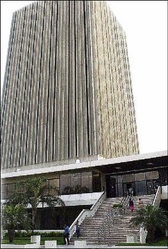
The Bank of Jamaica - File.
The Private Sector Organi-sation of Jamaica (PSOJ) has called for the Government to establish at the country's central bank a monetary policy committee armed with a mandate to push through necessary reforms.
This realignment would make the nation's monetary policy more transparent and accountable, the group has argued.
In a statement issued recently, the PSOJ said the creation of the monetary policy committee - which would also set interest rates - was the lynchpin of these reforms, as it could harness the best and brightest economists, within and without the Bank of Jamaica (BOJ).
Global best practices in central-bank governance were in line with the move, the group said. It cited a recent study by the Bank for International Settlements, which found that monetary policy committees (MPCs) were a common feature in many central banks worldwide.
Said the PSOJ: "In Jamaica's case, we believe that the board of the BOJ should be guided in monetary policy decisions by an MPC, which includes independent members. The MPC would deliberate on issues of monetary policy and would make recommendations to the board.
Ultimate legal power
"The board would continue to fulfil all of its existing functions, including retaining the ultimate legal power to determine monetary policy, but would bind itself to take into account the monetary policy decision of the MPC."
This is the anatomy of the PSOJ's vision: The MPC would consist of seven members - the BOJ governor, three other BOJ representatives and three independent members, also appointed by the central bank. Irrespective of chairmanship, the committee's decisions would be arrived at consensually.
Market stability
"Great care should be taken to ensure that independent members have no ties to any financial institution, particularly those regulated by the BOJ," the PSOJ said.
Making public the deliberations of the committee "would allow our capital markets to absorb and process information more efficiently, and ultimately provide greater market stability," the organisation said.
In an apparent nudge to the key decision-makers to put their foot on the gas, the private-sector grouping suggested that the necessary framework already exists, under the Bank of Jamaica Act, for the committee to become a reality.