
Prime Miniter Bruce Golding ... struggling to keep Jamaica's economy afloat as crime increases and the country grows more corrupt. - File
The Economist, the publication with the look and feel of a magazine, but whose publishers prefer to call it a newspaper, published an article in its November 12th edition under the title "Gloomy Jamaica Unfixable? The burden of debt and crime".
Commentary in the local press suggests it has caused ripples, not at all unusual for us.
We placed great weight on products from abroad from the time of our founding, so to speak. This is true, whether we consider items of manufacture like shoes, cubed white sugar, American apples, or views of us as delivered in the foreign press.
Mind you, we often 'cuss' the foreign press as messenger but, regardless, we tend to stand up and pay attention.
We pay attention to whether the comment or review is perfumed, pristine and uplifting as in the Beijing Olympics, or negative and devastating as an exposé of the hidden underbelly of our inadequate heath care system on UK television, drug-running and money-laundering, or, at present, review of debt, crime and the possibility that this condition might be unfixable.
There is no debate as to the facts revealed in the article.
It revolves around an economy in tatters, crime and corruption. The title is derived, in great part, from a comment made by former British detective, Mark Shields, who was Jamaica's deputy police commissioner until August. He no longer believes the police force can be reformed. He revealed that half the officers in a key unit failed a polygraph test last year. In his view, it would be better to start again with a fully vetted staff and a new ethos.
"The patient is terminally ill and should be put down,' Shields told a forum on crime organised by the opposition People's National Party.
"The cost will be great, but the cost will be even greater from not doing it. If you don't fix crime, you can't fix the economy."
Sabotage and persecute
Shields is, by no means, the first to utter these sentiments. Many others have. And it is absolutely true.
Corruption in our police force appears rampant. There would hardly be a taxi driver unaware of this. 'Serve and protect' seems to translate to 'sabotage and persecute'.
Among criminal elements, pro-tection rackets even reach down to minuscule and small-scale business operations like vendors and the struggling taxi driver barely able to buy himself a deportee and run the route from August Town to Papine.
Carl Stone, more than two decades ago, worried publicly that 'area leaders' were becoming independent of politicians. What he had described as 'clientelism' was taking a new and alarming twist.
Instead of the state or its representatives providing 'rewards' to dependents and supporters, financial returns from the drugs trade and gun-running had transformed 'garrisons' into alternate seats of power for an area leader, as this became the responsibility of dispensing patronage.
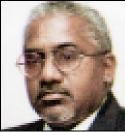
Wilberne Persaud, Financial Gleaner Columnist
The fact of order and 'safety' within the garrison is testimony to the power and organisation of the don. In effect, dangerous as it was, power and responsibility was, de facto, ceded to these figures because of political affiliation.
So, where have we come to now? As the Economist sees it: "Just over two years ago when Bruce Golding's Labour Party came to power in Jamaica, ending 18 years in opposition, there were modest hopes that it might make progress in tackling the island's endemic problems of economic stagnation and gang violence. Quite how hard that is has become clear in the past fortnight with the departure, first of the central bank governor and then, the police chief. Mr Golding's people inherited a huge national debt, much of it borrowed in the markets at interest rates that have sometimes topped 20 per cent. Just servicing this eats up about 60 per cent of Government revenues."
These facts are, again, completely true.
Obviously, the Economist did not poll public opinion for this article. If it did, it would have found out that the JLP's long sojourn in opposition had to do with its leadership problems.
PJ Patterson and the PNP owed at least a small measure of their extended tenure to the leadership squabbles within the JLP, the breakaway of heir-apparent Bruce Golding, and peoples' perceptions of these issues.
They would also have learnt that a majority of Jamaicans were unhappy with the fact that the PNP was in power so long that the attendant impact was the incumbents beginning to feel 'like dem own de place, behaving like God give dem right to run tings!'
Goodwill
So Golding began with tremendous goodwill and much hope. It seems, though, that he waited too long to set about fixing things. If the Government was dissatisfied with central bank Governor Derick Latibeaudiere's approach to policy, it should have dealt with it upfront. If crime was to be tackled, that too would have had to be an immediate intervention.
For popular sentiment to be won, they would have had to begin tackling the huge problem of poverty and inequality with all its ramifications.
If, as is being said on the veranda, internal policy debate is hijacked by big business, then the latter cannot be addressed.
But, is it really unfixable? What is a failed state? Most commonly, a failed or failing state tends to be associated with a few features: its central government is weak or ineffective, with little true control over much of its territory; it cannot provide essential public services; the society is overrun by corruption and criminality, and includes refugees and involuntary movement of populations while it suffers sharp economic decline with little prospect of turn-around.
While there are some worrisome features and trends, Jamaica has not yet fully descended along this path.
It's not too late for a fix, but time is running out.
wilbe65@yahoo.com