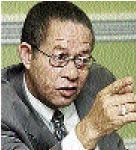
Prime MInister Bruce Golding has promised a report to lawmakers ahead of the IMF deal. - File
The Jamaican Government faces an extremely tight schedule over the next few weeks as it races to put the final touches on both the first supplementary sstimates and the medium term economic programme.
According to the prime minister and the minister of finance, the supplementary estimates should be tabled in Parliament in early September 2009.
The Standing Finance Committee will then review the estimates prior to them being approved by the House of Representatives, and the Senate, respectively.
A team from the International Monetary Fund is due in two weeks on September 8. Prime Minister Golding has said the drafted letter of intent would be submitted to the fund a week thereafter and that a decision on the US$1.2 billion stand-by facility would be conveyed, he expects, by October.
Given the fact that the actual revenues collected during the first four months of the current fiscal year have been significantly less than budgeted, it is anticipated that the Golding administration will be tabling both the revised estimates of expenditure as well as the revised revenue estimates - including the recrafted tax measures - for consideration and approval.
In terms of the proposed expenditure cuts - Golding has mandated cuts of about $17 billion - particular attention will be paid to several big-ticket programmes, such as the constituency development fund.
Back-to-school expenses cut
Already members of parliament have found that earlier this month they only received $1.5 million each for back-to-school expenses, which is a half of what most had requested.
Special attention will also be paid to the revised allocations for loan amortisations in the Ministry of Finance estimates.
The issue is whether the decision will be taken to roll over certain loans due this year, and the extent to which the projected allocations regarding guaranteed loans and budgetary support for certain ailing public bodies such as the Jamaica Urban Transit Company, Sugar Company of Jamaica and Air Jamaica are maintained in the current budget.
Other areas of interest include the allocations for wages and salaries, travelling allowances, and whether cuts in the capital budget are made primarily as a result of delays in implementation of the various approved projects.
At the same time, the Government will also have to share the details of the framework for the Medium Term Economic Framework (MTF) with parliamentarians, as this will form the basis for the letter of intent to the IMF.
The MTF will give a clear indication of the priorities over the next few years.
Already the prime minister has indicated that the administration is committed to eliminating the fiscal deficit by the year 2015 - originally they had intended to do this by 2013 - reducing the public sector wage bill to about nine per cent of the budget, and to reduce interest rates to under 10 per cent per annum.
Policy directive
These and other measures will be spelt out in the MTF, signalling the policy directive regarding energy and the prospects for the productive sectors, including the bauxite/alumina, tourism and agriculture; and proposed areas of emphasis for tax reform and improved tax/financial administration.
All of this will have to take place prior to the IMF board meeting in October.
The Government hopes its letter of intent will be considered at that meeting, and that the board will approve the two-year standby facility requested.
As such, the Government expects to get the signed letter of intent to the IMF by the latest in the third week of September 2009.
It is critical that the Government is able to keep to this timetable, as it will not be able to access funds from the other multilateral agencies for budgetary support without the IMF approval of the standby facility.
As it currently stands, the other multilaterals are awaiting the approval of the IMF facility, and if given, it is understood that Jamaica could access funds in excess of US$800 million during the current financial year.
Most of the funds would be made available by the Inter-American Development Bank, including an emergency loan to a maximum of US$500 million, and budgetary support in the region of US$170 million.
Further funds
The World Bank and the Caribbean Development Bank could provide a further US$100 million and US$30 million, respectively.
The European Union is sticking to the commitments that it had given for the current financial year.
There is, therefore, very little wiggle room for the Government given the tightness of this schedule, and it will be hard-pressed to make the various deadlines while keeping the commitment made by PM Golding that he would outline the terms of the IMF agreement to Parliament and the nation prior to the signing of the letter of intent.
There is where Golding is expected to clearly articulate details of the IMF programme, the conditionalities attached and what this will mean for each and every Jamaica.
It is crunch time now.
renee.shirley@yahoo.com