
Robert Buddan - POLITICS OF OUR TIME
Principal of the Norman Manley Law School, Professor Stephen Vasciannie, delivered the Eighth Michael Manley lecture at the UWI, Mona campus, organised by the Michael Manley Foundation and UWI on the occasion of Manley's birthday on December 10. The professor spoke of three areas in which Manley's moral diplomacy challenged the prevailing practice of western international law.
Manley advocated the use of force against the unjust apartheid regime in South Africa. He felt that local courts should settle disputes over investment rights such as in the case of the bauxite levy of 1974. He also believed in social and labour rights and the right to development under the UN's international covenants on civil and political rights as well as on economic, social, and cultural rights.
Delano Franklyn, chairman of the Manley Foundation, wrote in Michael Manley: The Politics of Equality (2009), that Manley, the internationalist, understood the interplay between national, regional and international forces. Here is an example of how Manley thought. In the 1970s, he wanted greater self-sufficiency in housing, feeding and clothing of Jamaicans. He did not think there was sufficient support for local textile mills from the merchants and manufacturers. They imported too much. He therefore began to make arrangements with the Republic of China for a synthetic textile mill to give Jamaica greater self-sufficiency in fabrics and finished garments.
Considering Jamaica's well-known talent in fashion design and modelling, this is a natural people's industry that we should have taken better advantage of a long time ago. We still can. People's National Party (PNP) leader Portia Simpson Miller and Foreign Affairs Spokesman Anthony Hylton can revive Manley's internationalism over Golding's increasing isolationism to the benefit of new people industries through Jamaica's Asian diplomacy. They recently travelled with a high-level PNP delegation to China. Bruce Golding missed the opportunity by not taking up an invitation to visit China this year. Whether it is about textiles, music, sports, tourism, education, health, energy, bauxite, and whether it is in the realm of services or goods, we must pursue global political and economic diplomacy to the fullest.
UN DIPLOMACY
In 2005, Jamaica was China's largest trading partner in CARICOM enjoying a surplus on balance of trade. We held a trade fair then and the two countries signed a comprehensive agreement on co-operation in a wide number of areas (as above). There is much we can do with this rising star of global economics. Golding's current diplomacy seems to be centred on Trinidad and Air Jamaica against the background of International Monetary Fund (IMF) demands.
Take this other example. In 1990, Manley and ANR Robinson, then prime minister of Trinidad and Tobago, submitted a proposal to the United Nations for a multilateral strike force with responsibility for interdiction of drug flows. Around 1987, CARICOM had formally recognised the drug threat to the region and Manley and Robinson were particularly sensitive to the threat this posed to small, open democracies, confirmed by the West Indian Commission's Report of 1992. The US and UN ignored Manley and Robinson at what we now know to be tremendous cost. Jamaica and Trinidad have the highest rates of drug-related murders in the region.
We need to revive an idea such as this. The present administration is too compromised over the 'Dudus' Coke matter to do so. Can you imagine the backlash if Golding asked the UN to supply a strike force against drug traffickers in Jamaica? Manley's successors in the PNP must do something to engage multilateral help against drug terrorists. Golding failed to attend a UN session this year instead of using the opportunity for diplomacy to help counter our drug problem.
INTERNATIONAL SOCIALISM
Manley was an honorary president of Socialist International (SI), an international organisation of social democratic political parties. At times, a majority of European governments are ruled singly or in coalition by member parties of SI. Manley was the founding chair of SI's Committee on Economic Policy which produced the influential book, Global Challenge (or Manley Report) in 1985. Now, SI is an influential voice for a social democratic way forward to a sustainable future, and what it calls, progressive politics for a fairer world.
It works through a number of commissions and committees, such as those on global warming from high carbon economies; social cohesion, poverty and aids; common security, disarmament and peace; and the global financial crisis and a progressive response. Forty SI parties met in the Dominican Republic in November, a few weeks ago. Portia Simpson Miller represented the PNP and reports are that her speech was one of the best received. Her ideas for a progressive agenda in Jamaica are attracting attention globally among those who believe in progressive politics for a fairer world. Again, Golding missed an opportunity. The JLP is not a member of SI but he had postponed a trip to the Dominican Republic for this year where he could have sought out opportunities with parties that are friendly to Jamaica.
For example, Gordon Brown, the British PM is big on climate change. The Jamaican Government did indeed send a delegation to the Copenhagen Summit on Climate Change in Denmark. Brown wants to raise billions of dollars to help developing countries fight the many dire consequences of global warming. Brown's party is a member of SI and he spoke at the SI meeting in the DR. Manley would not have missed the opportunity to attend and Portia Simpson Miller did not. It is a big issue for her because global warming harms everyone, especially the poorest.
Manley's moral diplomacy might not have prevailed in law in every case, foreign investments for example, as Professor Vasciannie pointed out, but his morality continues to carry great weight. Brazil, Russia, India, China and South Africa are rising stars that have many quarrels with western international law. We might therefore see new trade laws emerge as their power grows. We might one day see the United Nations Security Council take more responsibility for interdicting drug trafficking. We might see, not socialist international law, but the laws and principles of progressive politics for a fairer world that Socialist International stands for.
diplomatic capital
A country like Jamaica need not and cannot afford to be isolationist. Manley made Jamaica a voice in international affairs out of proportion to its size and level of development. Its development is now in rapid reversal. Jamaica must use its valuable diplomatic capital, that is, its reputation and respect that countries such as China, Cuba, South Africa, Brazil, and India have for it, to change international morality and international law. Jamaica must be internationalist.
Manley was neither insular nor isolationist and so not a stay-at-home politician. Bruce Golding announced in September that he would stay at home. In 1978, Manley said the developed world wanted Third-World leaders to be 'tame stay-at-home' leaders thinking 'we are too small'. But if each leader equally said, 'we better stay at home because we are not anybody much', not one thing will change. Happily, Jamaican and some other leaders did not stay at home and some things are changing.
Robert Buddan lectures in the Department of Government, Mona Campus, UWI. Email: Robert.Buddan@uwimona.edu.jm or columns@gleanerjm.com.
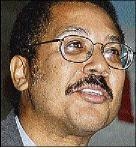
Vasciannie
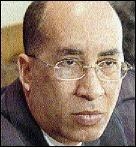
Franklyn
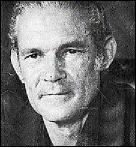
Manley