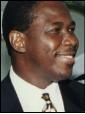
Claude Clarke
The prime minister's prime-time interview performance last Sunday conjured up for me the image of a car stuck in the mud, its wheels spinning while it sinks deeper and deeper into the rut. Based on his presentation, Government's primary focus under the soon-to-be finalised International Monetary Fund (IMF) agreement, apart from increasing the national debt in the short run, albeit at lower interest, will be the extraction of more taxes from the people and returning less to them in services.
From all indications, there is no real development agenda; no development policy framework capable of spurring production and growth, especially at the small and medium-enterprise level from which the vitality of an economy comes. From what I heard, it seems the fiscal programme agreed with the IMF has left no room for meaningful economic development and may do more to deepen our economic hole than to take us out of it.
These are the circumstances in which a people look to an opposition party for hope - hope that though they may have to endure the pain of austerity today, they might have the prospect of a better future. To a large extent this is what sustained the Jamaican people during the most difficult years of the IMF in the 1970s: the hope that Eddie Seaga's opposition Jamaica Labour Party (JLP) would have provided a better way. But the Opposition People's National Party (PNP) today seems to be stuck in its own policy rut and what it seems to be offering for the future is a return to the past policies which were central to the digging of today's economic ditch.
Opposition's policy
The time is now most opportune and the people most expectant for the opposition party to propose bright new policy ideas to chart the future direction and development of the country. Not only because of the expected austerity of the IMF programme, but because the present Government's policy of economic continuity has proven to be incoherent and unworkable. How easy it should be for the Simpson Miller-led team to now embrace and promote policies consistent with the party's earlier missions. Policies of economic self-reliance (as distinct from self-sufficiency), a domestic production focus and export-led growth?
Where is the opposition's policy for a social economy, which was so central to Norman Manley's early mission? What about its alternative energy plan to generate competitively priced energy to drive our economy within a reasonably short timeframe?
The economic contraction, which had already begun with the international financial crisis will accelerate with the expected contractionary effect of the IMF programme and will impose severe economic pain at the bottom end of society. Why is the PNP not now promoting a policy of incomes rationalisation to help those at the bottom of the economic ladder maintain an acceptable quality of life while seeking to compress incomes at the top, where they are already far above the range of our CARICOM neighbours and have contributed substantially to our economy's uncompetitiveness?
The massive loss of industrial capacity during its recent time in office should not preclude the PNP under new leadership from campaigning for the reinstatement of the country's industrial-development capability, which has somehow got lost in the several incarnations of the Jamaica Industrial Development Corporation, ending up as Jamaica Trade and Invest. Surely, the party could have put forward a plan to refresh and maintain the technical skills of the thousands who were displaced in the greatest exodus of skilled jobs of our time!
I am told there is a fear in the PNP that announcements of new policy ideas would lead to them being stolen by the Government. That is ludicrous! Once a party announces a policy idea, it owns it. Ideas kept secret are far more susceptible to theft than those which are exposed and claimed. A policy idea announced by the Opposition and adopted by the Government does not make it any less the Opposition's idea, and in fact, would enhance the Opposition's image in relation to the Government. But is it that the professed fear of policy plagiarism is merely masking a latent dog-in-the-manger attitude on the part of some in the PNP? A position which would rather see the country go wrong if they cannot be the ones to put it right?
The interventions in the political debate by the Opposition now seem largely confined to criticisms of the Government, and are not always constructive and are more reminiscent of Seaga's promise to "Oppose! Oppose! Oppose!" than reflective of the party's vanguard tradition of bold, new policy ideas which fire the imagination and lift the hopes of the Jamaican people.
Our people are eager to hear new policy ideas from the party. If it has new policies, it should come out with them now and give the people something to believe in and to hope for. It is not enough to wait on the JLP to fail.
This absence of new ideas from the Opposition has simply left a perception vacuum available to be filled by the stain of FINSAC and its negative implications. The party is going to find that the excuses for FINSAC, which worked so well while it held the intimidating hand of governmental power, will no longer wash. It will no longer be able to convince anyone with a brain that the collapse of the entire financial sector was due to isolated alleged corrupt acts by one or two individuals operating within the confines of their small-enough-to-fail banks.
small savers and pensioners
Or that the $140 billion price tag of FINSAC in 2001 (over 40 per cent of GDP) was needed to save just small savers and pensioners from ruin. If this claim is to have any validity, our past financial managers should inform us what proportion of the deposits in the financial institutions really belonged to small savers, and what proportion represented the interest-inflated accounts of large corporations and high net-worth individuals. Hopefully, this question will be answered in the enquiry. The answers will go a long way to revealing who was really rescued by FINSAC.
The indelible tarnish of FINSAC will continue to stick to the PNP for as long as its policy hiatus remains. And it may require a shake-up of its leadership to free it of this handicap and make it electorate ready again.
Not that the party has not had ample opportunity to reshape its policies and give the public a newer, more attractive alternative. The fact of having a new leader with an image diametrically different from the economic model pursued when the party last held power is perhaps the greatest of these opportunities. Portia Simpson Miller's image is that of a defender of the poor, a fighter for justice with a passion for social and economic equity.
The economic policies pursued by the recent PNP administration were none of those things. How easy, credible and politically beneficial it would be for this new leader to break with those past policies and offer a new way - a path more consistent with her image - and coincidentally, with the core principles and objectives of her party and its founding fathers.
Second, political parties in opposition are expected, if not duty bound, to renew their platform to give the electorate the assurance that they are worthy of its confidence and trust again. But by its performance in opposition so far, no one could suspect the PNP of having any such design. The internal incongruity and destructive consequences of the economic model it imposed on the country while in office are likely to be exposed by the FINSAC enquiry; and will, therefore, reinforce the public's determination not to trust that economic model again.
fraternal loyalty and common sense
And yet, the PNP seems determined to identify itself, and more important, its new leadership, with that model. There is a difference between fraternal loyalty and common sense. By the leadership of the party turning up at the enquiry, ostensibly to show solidarity with a Comrade, the party has literally imprinted its future image with the unpleasant memory of FINSAC. The party should have long ago devised a strategy to create distance between its new leadership and that bleak economic period. It should never have shackled itself to it, as it seems to be doing by its stance in the FINSAC enquiry.
The third opportunity missed is that presented by the global economic crisis. If the PNP in any way recognised that its economic policies had failed and needed to be changed, it could easily and credibly have jettisoned those policies on the grounds that the new international economic reality calls for a new and different strategy. Instead, it has clung steadfastly, not only to its misguided belief in the correctness of the policies, but has stood in stout defence of the stewards who engineered and executed them.
The public is now fully conscious of and focused on the seriousness and seismic impact of the global economic crisis and will want to judge which party is best able to handle its consequences: the JLP with a fresh, though so far inept, set of hands, or the PNP, with old undistinguished hands, burdened with the task of carrying the baggage of its past failed economic policies.
The JLP has already made and will no doubt make many more mistakes. And unless the PNP can break with the past and give Jamaicans hope that it can help create a different and better tomorrow, we will be spinning wheels and remain in the mire, for a long time to come.
Claude Clarke is a former trade minister and manufacturer. Feedback may be sent to columns@gleanerjm.com
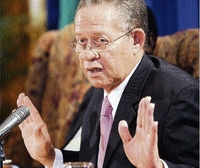
Golding